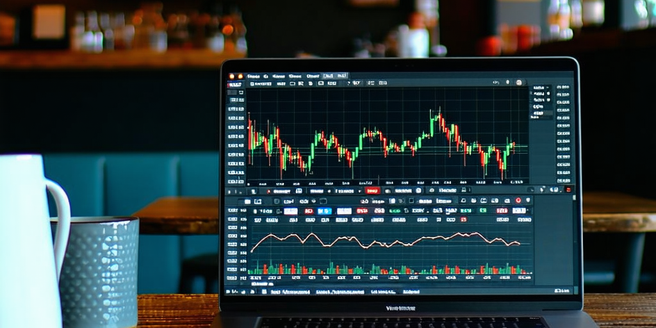
Understanding the Basics of Technical Analysis
| Concept | Description | Purpose |
| Price Patterns | Analyzing historical prices | Predict future directions |
| Volume Analysis | Study of trade volumes | Confirm trends |
| Trend Lines | Visualize price movements | Identify trend direction |
| Indicators | Mathematical calculations | Support decision-making |
| Support & Resistance | Price levels identification | Predict price reversals |
| Charts | Graphical representation | Easier analysis |
Key Indicators for Market Trends
Technical analysts rely on key indicators to interpret market trends accurately. Moving averages are often used to smooth out price data over a specific period, helping in identifying the overall trend in the market. Volume is another critical factor that traders consider in conjunction with these indicators. In volatile markets, understanding how volume and price move together can provide crucial insights. Relative Strength Index (RSI) and Moving Average Convergence Divergence (MACD) are also significant indicators used to gauge market momentum and potential reversals. By analyzing these indicators collectively, traders gain a clearer perspective on current market conditions, enabling informed decision-making. Indicators help filter out the noise, allowing traders to focus on the true price dynamics by providing a streamlined view of market trends.
Utilizing Moving Averages in Analysis
Moving averages are a fundamental component of technical analysis tools, providing a clear view of price trends by smoothing out fluctuations. They are calculated by averaging the closing prices over a given time frame, such as 20, 50, or 200 days. Traders use moving averages to identify trend directions, potential entry and exit points, and support or resistance levels. Additionally, moving averages can be combined with other technical indicators for a more comprehensive market analysis. Understanding how to properly apply moving averages can significantly enhance trading strategies. The intersection of different moving averages can signal potential trend reversals or continuations. By serving as a dynamic support or resistance level, moving averages assist traders in identifying optimal trading opportunities within market trends.
The Importance of Volume Analysis
Volume analysis plays a vital role in validating price trends and confirming the strength of market movements. It refers to the number of shares or contracts traded in a security or market within a given period. High volume indicates strong investor interest, providing insights into underlying price action. Experienced traders often pay close attention to volume spikes as they can signal significant market shifts. Technical analysts use volume as a confirmation tool, revealing the true intent behind price movements. For instance, a price increase followed by high volume signifies strong buying pressure and the potential continuation of an uptrend. It aids in distinguishing genuine trends from possible market noise, enhancing trading decisions.
Exploring Oscillators: RSI and MACD
Oscillators, like RSI and MACD, are essential tools in technical analysis, helping traders identify overbought or oversold conditions in the market. The Relative Strength Index (RSI) measures the speed and change of price movements, oscillating between zero and 100. A reading above 70 suggests an overbought market, while a reading below 30 indicates an oversold condition. Understanding these signals can significantly enhance a trader’s decision-making process. Traders who utilize these tools often gain a strategic advantage. These indicators can be particularly useful in volatile market environments. Moving Average Convergence Divergence (MACD) analyzes the relationship between two moving averages and provides signals through MACD line crossovers. These oscillators guide traders in recognizing potential reversal points, aiding in effective trade entries and exits.
Chart Patterns: Recognizing Formations
Chart patterns are visual forms of technical analysis that help predict future price movements based on historical patterns. Popular formations such as head and shoulders, double tops, and triangles provide key insights into potential market direction. Traders use these patterns to spot continuation or reversal signals. Moreover, understanding the context in which these patterns occur can offer additional clues about market trends. By studying past data, traders can improve their market strategies and boost their profit potential. Each pattern indicates a specific sentiment prevailing in the market, allowing traders to anticipate price breakouts or reversals. Successfully identifying these patterns often requires practice and experience. Recognizing these formations effectively enhances a trader’s ability to capitalize on market opportunities through a better understanding of the prevailing market psychology.
Using Fibonacci Retracements Effectively
Fibonacci retracements are widely used technical analysis tools assisting traders in identifying potential entry and exit points in the market. Derived from the Fibonacci sequence, these retracements highlight potential support and resistance levels through horizontal lines at key Fibonacci levels: 23.6%, 38.2%, 50%, and 61.8%. Many traders rely on these levels to make strategic decisions. Their popularity stems from the reliable patterns they often reveal in market movements. Traders apply these levels to a trend to gauge possible correction levels before a potential continuation. Understanding how these levels interact with market trends is crucial for making informed trading decisions. Effective use of Fibonacci retracements helps traders anticipate reversals or trend continuations, providing a robust method to pinpoint strategic market entry and exit points.
Identifying Trends with Bollinger Bands
Bollinger Bands are a versatile tool in technical analysis, assisting traders in identifying trends and market volatility. These bands consist of a moving average line, enveloped by an upper and a lower band calculated based on standard deviations. When the bands narrow, it suggests low market volatility, often preceding significant price movements. Many seasoned traders rely on these signals to adjust their trading positions accordingly. Conversely, widening bands indicate high volatility. Traders often combine Bollinger Bands with other indicators to confirm their analyses. Implementing them effectively requires a good understanding of market behavior. Traders monitor price interactions with these bands to gauge potential breakout points. Bollinger Bands empower traders to recognize periods of consolidation or trend emergence, enhancing their market strategy.
Combining Indicators for Robust Analysis
Using a single indicator can provide valuable insights; however, combining multiple indicators offers a more comprehensive analysis and robust strategy development. By integrating trend indicators, momentum oscillators, and volume metrics, traders ensure a more balanced view of market conditions. It is essential for traders to understand the unique contributions each type of indicator brings to the table. The strategic use of different indicators allows for adaptability in ever-changing market dynamics. The synergy of indicators like RSI, MACD, and moving averages enriches accuracy, filtering out erroneous signals. This allows traders to minimize risk and maximize potential profits. This holistic approach assists in reaffirming trading decisions, potentially leading to enhanced trade performance. A well-rounded analysis incorporating various indicators gives traders an edge in complex market environments.
Common Mistakes in Technical Analysis Tools Usage
Investors often make mistakes while using technical analysis tools, leading to inconsistent results. One common pitfall is over-reliance on a single indicator, without considering broader market trends. This misstep can result in prematurely entering or exiting trades. Staying informed about global economic news can also provide valuable context for technical analysis. However, it’s equally important to remember that no strategy is foolproof. It’s important to regularly evaluate the effectiveness of chosen indicators and adapt strategies accordingly. Another mistake involves using indicators without understanding their underlying principles, resulting in misinterpretation. Traders should avoid emotional bias impacting technical analysis interpretations, ensuring data-driven decisions. Continuous education and practice in technical analysis are crucial to refining skills and avoiding misjudgments in the dynamic trading environment.